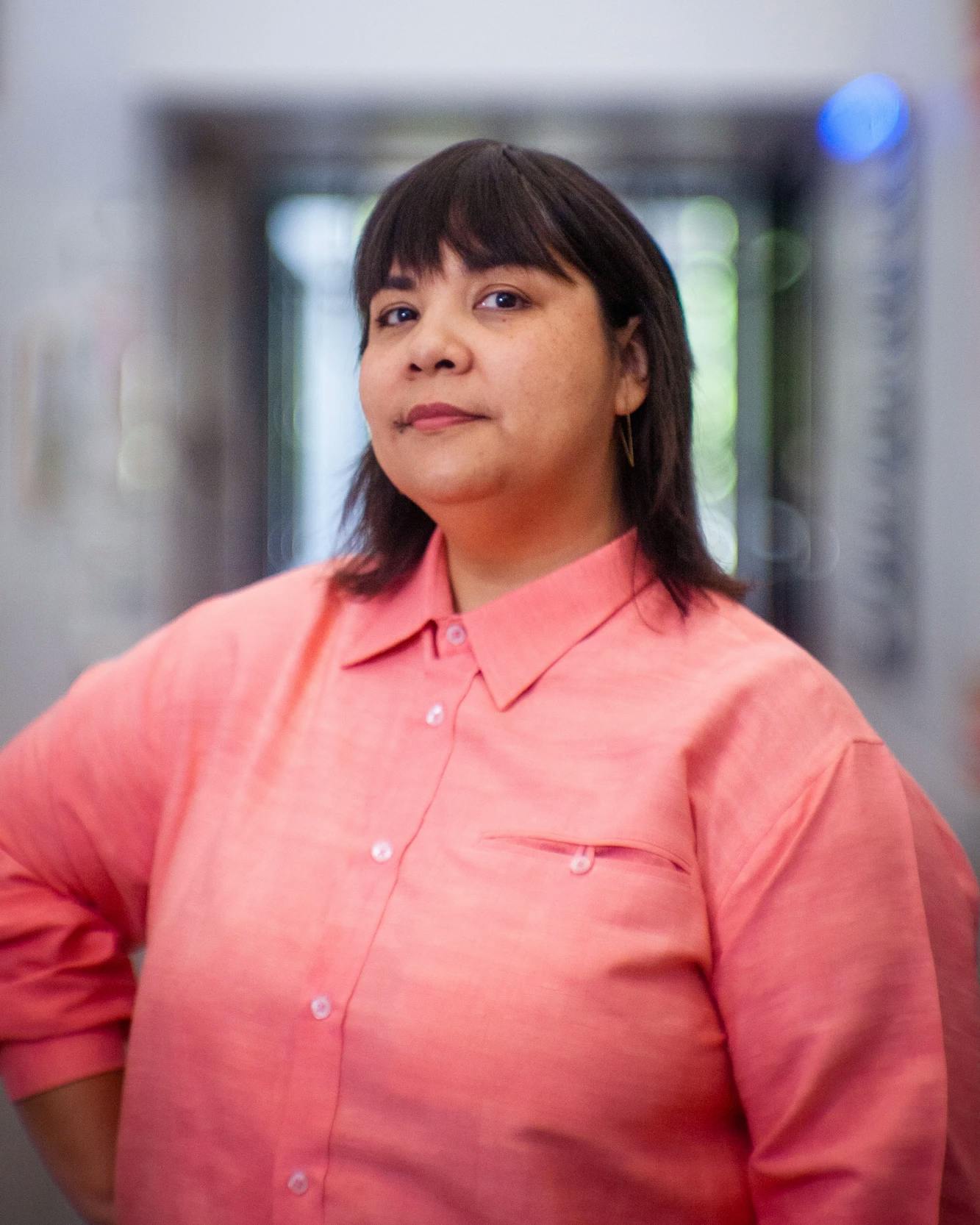
Xochi Solis in Residence at Pocoapoco

Fresh from her residency at Pocoapoco in Oaxaca, México, Xochi Solis offers a glimpse into the making of this new body of work, reflecting on the deeply embodied experience of reconnecting with her ancestral homeland.
Uprise Art: Why was this residency and/or location of specific interest to you?
Xochi Solis: I was drawn to Pocoapoco because Oaxaca has long felt like a place where artistic practice, cultural memory, and community life are deeply intertwined. My previous residency experience in Oaxaca back in 2016 left a lasting impression on me, especially the ways local traditions are sustained through collaboration, care, and intergenerational knowledge. Returning felt meaningful not only because of my earlier connection to the region, but because I wanted to revisit it with more lived experience and a deeper sense of what it means to be in dialogue with place and with myself.
Like my other recent travels, this residency was spurred by a desire to better know who I am. I wanted to be enveloped by the sensation of being in the land my ancestors were from, to somatically explore memory, and to let that embodied experience inform my creative work.
Xochi Solis

I don’t know my ancestral roots much beyond the generations that immigrated to the United States, and there is an ache in that, but being in Oaxaca offered a way to coexist with tension and complexity rather than resolve it.
Pocoapoco was particularly compelling because of its emphasis on process, reflection, and exchange rather than production alone. That aligns closely with my practice as an artist and community organizer, where I’m always thinking about how creative work can exist within broader ecosystems of support, reciprocity, and alternative learning spaces.


Pocoapoco is women‑founded and run by a committed group of artists and cultural workers who are genuinely interested in supporting the exchange of ideas across disciplines, cultures, and geographies. Their international residency program intentionally creates a fluid space for thinkers with varying approaches to art making and creative living. Combine this ethos with the tender offering of home‑cooked, shared meals and well‑kept, quiet studio spaces, and you have an ideal setting for a creative reset and for reimagining what an artist’s life can look like long term.
UA: Did you arrive with a plan, and did that plan change once you were there?
XS: I arrived with a general plan rather than a fixed outcome. Materially, I knew I wanted to get closer to botanical and earth pigments that could offer a window into resourcefulness and artistic traditions that honor the land. As a collage artist, I’m always collecting paper ephemera—books, magazines, pamphlets, postcards—because printed matter can tell you so much about a place’s identity, and México’s colors and textures are endlessly inspiring. I was excited to work with handmade papers rooted in Oaxaca’s paper‑making traditions and to see how those surfaces might shift my approach to layering and color. Culturally, I hoped to deepen my relationship between place and identity, focusing on the role of the artist within cultural ecosystems in Oaxaca and México at large. I imagined making pieces that responded directly to the city and valley through found materials, observation, and reflection, while also thinking about how art making and storytelling can foster resilience and sustainability within cultural networks. Part of my intention was to explore new frameworks for collective creativity and to gather impressions, experiences, and ideas that might feed my practice long term.


Once I arrived, my plans loosened up in the best way. The rhythm of the residency, conversations with other artists, and simply being in México nudged me away from a certain result and toward really paying attention to what was unfolding around me. Studio time became intertwined with reading on the sun‑filled patio, dropping into my peers’ studios, and saying yes to last‑minute invitations that gently shifted the work. Listening to my fellow residents’ origin stories and learning their hopes and dreams helped me feel aligned in a new way; I left with a clearer sense of the questions I want to ask myself as my work continues to develop, and better questions to guide my criticality in the world around me.
In Oaxaca, another Mexican‑diaspora artist told me, ‘It’s not re‑learning, it’s remembering.’ That reframing cracked something open. The idea that who we are is already embedded in us. That it’s about tuning in rather than trying to learn our way back was a turning point for me.
Since returning home, I’ve started trusting that my origins live in me already, and I’m honoring that by new movement practices—by dancing, sewing, gardening—rather than staying stuck in my head. I feel almost like a zealot for new experiences, liberated from the heavy, cerebral overthinking that can sometimes dominate my practice. After decades of working, this shift feels like a new adventure.
Xochi Solis

UA: What was your favorite part about the residency?
XS: One of my favorite parts was the balance between solitude and shared experience. Having time to work quietly in the studio, while also being in community with other residents, created a tempo that felt both grounding and expansive. A major highlight was the chance to both teach and receive knowledge from the seven other artists in the program—four of us international, four from México—working across paint, printmaking, film, textiles, land art, and sound. We each led a workshop for one another, and that rapid exchange of methods and stories was unforgettable. It was like taking a week‑long course in how other artists think, dream, and build worlds!
I loved being in Oaxaca itself—moving through the humming city and surrounding areas, noticing textures, colors, landscapes, and everyday details that settled into the work. I treasure the memory of being squeezed into a colectivo as the mountains whizzed by, selecting fresh produce, tortillas, and delicate salsas from vendors in the mercado, and wandering the streets where wedding parties’ twirling marmotas would erupt. Those moments of everyday richness shaped the way I thought about the work just as much as my time in the studio. They reminded me that art is fed by lived experience, by small pleasures and sensory memory, just as much as by hours at the work table.


UA: Was there anything surprising or unexpected about the residency?
XS: What surprised me most was how much the residency became about listening and learning.
I expected to be looking outward, gathering inspiration and materials, but I found that the experience also asked me to slow down and pay attention in a more internal way.
Xochi Solis
I allowed myself to catch up on the dense theory books I’d been neglecting, to nap in the middle of the day in praise of a good meal, to make a mess with new materials with abandon, and to simply see what surfaced. In that slower rhythm, I began to see my practice, my relationship to language, and my connections with other artists as intertwined threads in the larger question of what belonging across borders and across time can mean.
My family’s move to the United States came with pressure to become monolingual in English, and I’ve been slowly reclaiming Spanish as an adult, imagining that this reclamation might bring me closer to the country my family is from. In Oaxaca, I learned that it is the most linguistically diverse state in México, home to sixteen distinct Indigenous ethnolinguistic groups and over a hundred and fifty language variants. That knowledge complicated and deepened my sense of connection—it reminded me that México is not one language or one story, but many layered voices. I loved that our cohort related to one another through multiple languages as well as through our art‑making practices. It felt like a small example of how language and art can both serve as bridges, ways of building community and recognizing one another across difference.


The changes I noticed most were relational. I felt both confident and humble—comfortable asking for clarification on a phrase or word, and equally comfortable sharing my own perspective. I felt held in an intentional space to explore art making and to relate to others with the understanding that we were there to learn. I was reminded that the most meaningful parts of a residency are not always the most tangible. Sometimes clarity arrives through a conversation, a small routine, or even getting lost or making a mistake. In that sense, the residency became less about a single breakthrough and more about a series of gentle returns—to craft, to community building, and to the reasons I make work in the first place. No matter my accomplishments at home, while I was there I was a student, fresh and receptive.
UA: What work came from your time spent at the residency?
XS: The residency produced a body of work and a collection of materials that reflects my ongoing interest in collage, layered surfaces, and site‑responsive thinking. The pieces I made there carry traces of the experience of being in Oaxaca—not as direct documentation, but as an accumulation of my research, adventures, and everyday encounters. The small suite continues my larger practice of using found materials to explore place, identity, and cultural history. Buried in the layers of these works are delicate artisanal papers, natural pigments, and pages from Mexican printed media.


The materials themselves tell a story: time spent in a small paper making studio carved into the side of a hill in San Agustín Etla; natural dye workshops that further opened up the botanical world of southern México; meeting an artist in the market who makes her own watercolors from minerals and plants, pouring them lovingly into tiny ceramic bowls for sale; and long afternoons digging through used bookstores and vintage shops for books, magazines, and other paper ephemera to fold into my collages.
I think of this suite as work shaped by time, attention, and landscape—and as an opening toward future pieces that will continue to unfold from this experience.
Xochi Solis

[Published August 2026]