Days Documented in Color: Kristin Texeira

Uprise Art: Where are you from and where do you reside?
Kristin Texeira: I grew up in West Bridgewater, MA. Massachusetts forever is my modus operandi, but I currently live and work in Barryville, NY.
UA: What necessities do you require when making your art?
KT: Been going 20 years strong on using a #44 or #46 palette knife to apply my paint. Williamsburg or Old Holland oil paint all the way.

UA: Describe a typical day in the studio for you.
KT: There is nothing routine about a day in the studio for me in this current phase of my life. I have a 5-year-old and a 5-month-old, so I fit in color mixing in between dismantling Legos and feeding the baby. When I do have a solid chunk of time in the studio, I throw the headphones on, make a to-do list, and just jam on as much as I can. Otherwise, I patch together little windows of time working at home in the sunroom. Good light. And my ideas come in the shower (classic). I take very, very long showers.
UA: Are there any aspects of your process that are left to chance?
KT: I like to set parameters for myself. Because I work abstractly, it helps for me to have some roots set down before I start painting. I like to know why and for what purpose I am painting, so I’ll assign myself a concept, and that’s like a compass helping me steer the ship. Sometimes this can be limiting, so I go back and forth between having work that is a part of a series and having other work where I shut my brain down and just mix and react to whatever luck is getting laid down that day.

UA: What is your relationship to color?
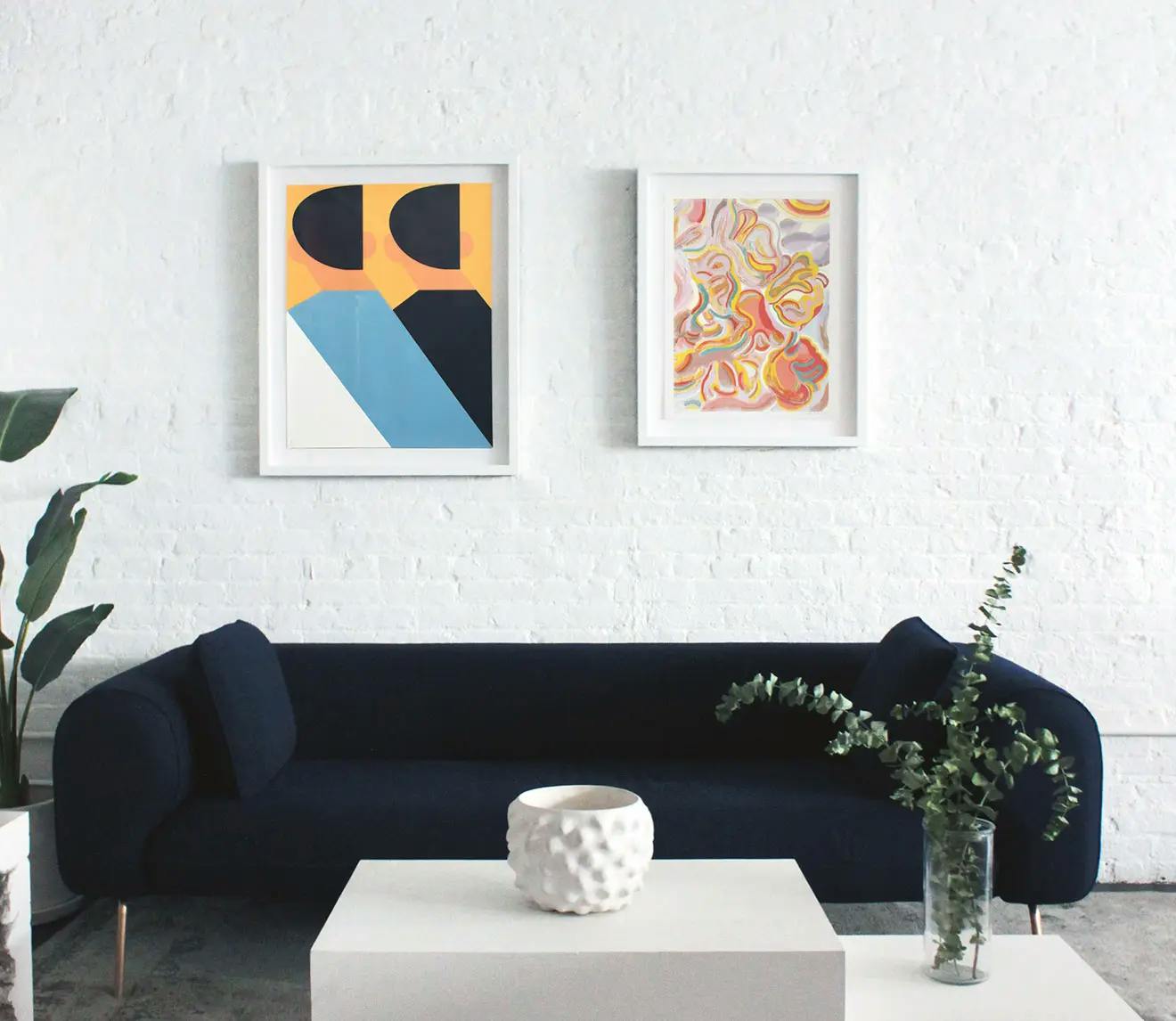
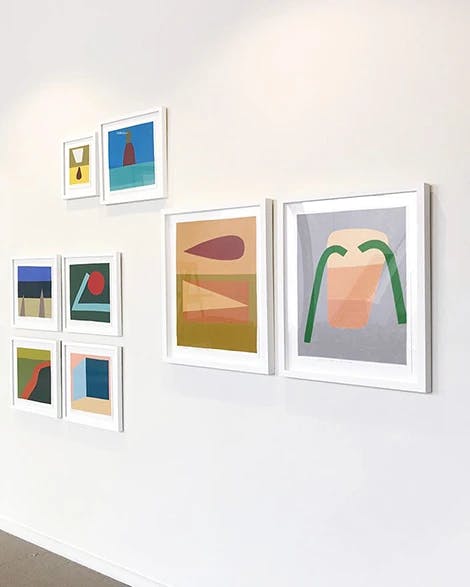
KT: Color is my means of categorizing everything. Playlists I sort by colors that I associate with songs. I know certain friends will get along swimmingly based on the colors they are as defined in my head. When I recall memories, colors come to mind. Color is my means of documenting the days.
UA: Do you find that your location strongly influences the direction of your work?
KT: Place affects my work emotionally and physically. Emotionally, because the setting triggers certain memories, or the people that make up a place might inspire my works. Physically, because the light encourages the colors that I mix. When I am by the sea, I get the most juicy, golden, saturated colors – when I’m in the cinderblock studio, it takes a different kind of effort to find the right colors.


UA: What are some themes you find recurring in your pieces, intentional or not?
KT: TIME & MEMORY
UA: Are you influenced by any author or non-visual artist? Are you influenced by any artist that does something completely different than you?
KT: Filmmakers and writers. In my next life, I will be a filmmaker. This life I’m trying to be half writer, half painter.
Filmmakers: Ingmar Bergman, father and daughter Coppola, Cassavetes, Louis Malle, Wenders, Gus Van Sant, Altman, can I get a PTA, can I get a Sydney Pollack, Alan J. Pakula. Let’s not forget the great cinematographer Gordon Willis. I’m sorry these are all guys except for Sofia, but I’m new. Lock me in the Criterion closet and throw away the key.
Writers: Lydia Davis, Joy Williams, Lucia Berlin, Sappho. Just got put on to Grace Paley. Ann Carson! Congrats on the Nobel Prize. And a classic Mr. Steinbeck (I will refuse to watch East of Eden on Netflix, keep its glory preserved on pages.)

UA: Do you remember the first work of art that captured your attention?
KT: Matisse’s The Red Studio. When I first started painting, I was making representational work; still lives and landscapes. My hand was pushing towards abstraction, but my head was resisting because I was afraid no one would understand it or think it was any good. (Blame my household of civil engineer adults.) When I read about Matisse and his struggle with the painting, I could relate. I think I read that he kept building it up and wiping it down over and over again. He was worried that maybe it was too simple. And look at it now in the MoMA. It was a painting that gave me permission to enter abstraction.
UA: Do you admire or draw inspiration from any of your peers who are also working now? Have you ever collaborated, or would you? How solitary is your art-making process?
KT: When I paint, I like to be completely alone. The good stuff comes when I can get into a sort of trance. But I have realized since I moved out of New York City how important and necessary interactions with others are for the concepts behind my work. So much of my motivation to paint comes from collecting stories from others or from having chance interactions. Now that I live in the woods with my family, the bizarro interactions that served my work so colorfully are few and far between. I fuel up on story collecting with quick trips to NYC or from doing art residencies. Recently I spent some time with my friend, artist Ellen Rutt. She is such a mind to jam with. We jump in deep about who we were in love with when we were 15, a specific feeling we felt from a sleepover in 2006, or why the hell we’re doing what we’re doing. A special thing about her is that I can have a story in my mind about life that is like a jail to me, and she’ll just crack the bars down with one enlightening sentence. Good to have friends like that - that you can paint next to, swap databases of memory with, and have your mind blown by them.

UA: Is there any artwork on display in your home/studio? Whose is it?
KT: Oh yeah, baby. Very lucky to be friends with painters that I admire. Have pieces by Caleb Hahne Quintana, Hutter Potter, Ellen Rutt, Nick Mancini. A sliver of wood from JB Blunk’s apple tree mounted and framed, if that’s considered art. Do we credit Blunk or the tree? And my husband, photographer Brian Kelley.
UA: What’s one of your favorite objects you own? What’s the story?
KT: I have so many favorite objects. I love objects the same way Proust does because stories and souls are embedded inside of them. One object that holds a particularly favorite history is this little slat of wood covered in blue fading paint that came from a houseboat in Sausalito where I once lived. The boat belonged to a Greek painter named Jean Varda, uncle of the filmmaker Agnes Varda. My time on the boat yielded infinite yards of inspiration for my work. Interactions with other artists and opera singers, scientists, inventors, Bitcoin miners, and poets. Maya Angelou once described the ship as a “happy child’s dream castle.”

Published November 17, 2026